

The Truth About Random Number Generators
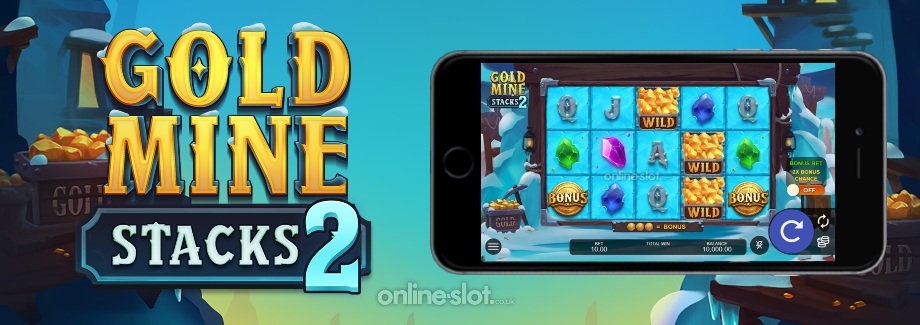
When we sit down to play Mine Slot, the turning reels and cascading gems create an experience that feels almost physical, as though the game holds a memory, a mood, or a rhythm we can understand. The reality is far more captivating and, for many players, remarkably empowering. Every symbol that appears, every bonus trigger, and every win amount is determined by a piece of software called a random number generator, or RNG. We are going to explore exactly how this technology works inside Mine Slot, what it means for the fairness of the game, and why understanding it can change the way we tackle each session. This is not about reducing the excitement but about providing ourselves with genuine knowledge that cuts through the myths and helps us make better decisions at the reels.
The way a Random Number Generator Really Functions
At its essence, a random number generator in a current online slot like Mine Slot is not genuinely random in the universal sense. It is a pseudorandom number generator, a mathematical algorithm that produces a sequence of numbers so unpredictable and evenly distributed that it is statistically indistinguishable from true randomness. The process starts with a seed value, often derived from an external entropy source such as server noise or hardware fluctuations, and then employs a complex formula to turn that seed into a stream of values. Every millisecond, no matter of whether anyone is playing, the RNG inside Mine Slot runs through billions of possible number combinations, each one corresponding to a different arrangement of symbols on the game’s virtual reels. By the time we press the spin button, the outcome has already been selected from that relentless numerical cascade.
What counts most for players is that this mechanism makes every single spin completely separate of everything that came before it. The RNG inside Mine Slot has no notion of a dry spell, a hot streak, or a near miss. It simply generates a number at the exact instant we ask for a spin, and the game’s software maps that number to a specific result on the paytable. If we were to peer under the hood, we would find that the algorithm is built to pass rigorous statistical tests for uniformity and unpredictability, including the diehard tests and the NIST suite. This assures that over millions of spins, the distribution of symbols and wins will match the intended mathematical model, providing us a game that operates exactly as advertised without any hidden patterns or biases.
Special Features and the Function of Unpredictability
Mine Slot features several bonus features that inject additional layers of randomness, and each one is driven by the same RNG that runs the base game. The free spins feature is triggered when three or more scatter symbols appear anywhere on reels two, three, and four. Because the scatter symbol is relatively rare on its designated strips, the RNG must produce the precise values that match to those stop positions, and it does so without any regard to how long it has been since the last trigger. This is a crucial point: the likelihood of hitting the scatters on any given spin remains constant, whether we have just initiated the feature twice in a row or have gone three hundred spins without spotting a single scatter.
Once the free spins are live, the game often adds a multiplier feature that expands with each winning cascade or with special multiplier wild symbols that show up only during the bonus round. The RNG keeps to work in exactly the same way, selecting random stop positions for those free spins. The variation is that the active multiplier values are placed onto the usual paytable, generating the potential of substantial swings. In some bonus structures, a pick-me round may appear where we select from hidden objects to uncover extra free spins or an increased multiplier, but even here the conclusion is fixed by the RNG at the moment of selection, ensuring the visual choice is purely cosmetic and for entertainment. There is no skill element that can affect the result, and that safeguards the honesty of the game.
- The dynamite wild symbol replaces for all regular paying symbols to finish winning combinations and is itself programmed to show up only on reels two, three, and four.
- Scatter symbols initiate the free spins feature with three or more in view, giving an initial set of free games plus a random multiplier range.
- During free spins, each win that involves a wild may boost the active multiplier, with the RNG determining whether a wild shows up on each free spin according to the same reel weightings.
- The maximum win potential is capped, and while exact figures change, games of this type commonly present up to 5,000 times the stake, with the RNG keeping such an result exceptionally rare.
In what manner Mine Slot Employs the RNG to Determine Every Spin
To comprehend the RNG’s role within Mine Slot, we have to picture what takes place between the moment our finger exits the spin button and the moment the reels stop. The game software obtains a number from the continuous stream generated by the RNG at that precise moment. That number is then run through a mapping algorithm that converts it into positions for each virtual reel strip. In Mine Slot, which we see as a five-reel, three-row grid with twenty fixed paylines, this signifies the RNG dictates exactly which symbols will be displayed on the screen and where they will land. Because the number is recorded at millisecond precision, the outcome is effectively impossible for any human to impact or anticipate, making every spin a fresh event governed solely by chance.
The reel strips themselves are not simple sequences of equally distributed symbols. Each strip holds a carefully weighted set of symbols where high-paying character icons, such as the dynamite wild or the mine cart scatter, show up far less frequently than the lower-value gemstone symbols. The RNG’s output chooses a stop position on each strip, but the weighting ensures the game’s overall return to player percentage can be reached over the long term. For Mine Slot, this weighting is particularly evident during the base game, where clusters of low-paying symbols occur frequently, while the sought-after scatter symbols that initiate the free spins feature appear only on specific reels, strengthening the excitement of those rare bonus entries.
Common RNG Misconceptions and Reasons They Are Wrong
Regardless of the transparency of RNG systems, myths remain that can cause players to make poor choices. One of the most stubborn is the belief that after a prolonged series of dead spins, the game is due to pay out. The RNG in Mine Slot has no awareness; it does not count how many unsuccessful spins have happened. The probability of hitting a bonus-inducing scatter set remains precisely the identical on spin count four hundred as it was on spin number one. Thinking otherwise contributes to a dangerous mental bookkeeping where we increase our wagers to pursue a imaginary due win, which is just the behaviour the mathematical framework of the game does not compensate.
Another widespread misconception relates to the concept of near attempts, where two scatters land and the third reel falls short. Some players interpret this as the game mocking them, suggesting that a win was virtually achieved. In actuality, the RNG determined a full set of reel spots right away, and the visual presentation simply shows a combination that features two scatters. The game does not know it has produced a near miss, and that result has no forecasting significance for the next spin. Similarly, the idea that a slot can run hot or cold over a brief session is a psychological misperception formed by our tendency to perceive sequences in random data. The RNG guarantees that every spin is an separate trial, and any bunching of wins or losses we experience is just the essence of chance itself.
Armed with the truth about how the random number generator works, we can handle Mine Slot with a significantly better mindset. The first practical step is to confirm the game’s RTP and volatility information on our own by viewing the paytable or the information screen within the game client. Being aware of the theoretical return and the sort of ride to look forward to from the volatility enables us to set a budget and select a bet size that matches our bankroll. The bet range in Mine Slot generally starts at around £0.20 per spin and increases to £100 or more, catering to both cautious players and those pursuing higher stakes. We should consistently choose a level where our session can handle the natural variance that the RNG will produce over hundreds of spins.
We also gain from understanding that no betting system or special ritual can impact the RNG’s output. Martingale, Fibonacci, or stopping the reels manually have zero effect on the mathematical independence of each spin. This releases us to concentrate on what genuinely matters: the entertainment value, the delight of the mining theme with its glowing gems and explosive animations, and the gratification of occasionally activating the free spins with a growing multiplier. When the RNG delivers a rare max win of several thousand times our stake, we can value it as a purely statistical event that we were blessed enough to be part of. There is no skill to enhance the odds, but there is tremendous value in gaming with eyes wide open, realizing just what the game is doing behind the scenes.
Finally, we encourage every player to utilize the session reality checks that many UK-facing platforms supply, setting a time or loss limit before the reels start spinning. Because the RNG assures that a streak of negative variance can emerge at any moment, these guardrails shield us from the emotional decision-making that myths can cause. We tell ourselves that Mine Slot is a beautifully crafted piece of mathematical entertainment, and the random number generator is the engine that renders it fair, unpredictable, and exciting. When we embrace that truth, we stop searching for patterns that do not exist and start appreciating each spin for what it really is: a completely fresh roll of the digital dice.
The payout percentage and Variance Under the Statistics
When players discuss the mechanics of Mine Slot, two terms appear frequently: player return and risk. The RTP is a theoretical rate that indicates how much of all staked money the game is set to return to players over an vast number of spins. While we cannot quote a number that is not listed on the game’s authorized data page, slot games like Mine Slot generally function with an RTP in the range of 95% to 97%. This figure is not a promise for our personal session; it is the long-term statistical projection built into the RNG setup and the reel assignments. The RNG alone does not aim for a payout percentage spin by spin, but over numerous of outcomes the balanced symbol allocation naturally produces the designed RTP, forming a house edge that is numerically consistent.
Variance, on the opposite hand, defines the risk pattern and win regularity. In our experience with Mine Slot, we recognise a medium-to-high volatility structure, indicating the game is inclined to provide fewer frequent base game wins but generates real tension around the bonus features, which hold the possibility for larger wins. The RNG manages this also, because the algorithm’s symbol weights define the probability of achieving successful combinations and reaching the bonus round. A high-variance mapping will place longer sequences of unsuccessful or low-value spins between those rewarding instances where the free spins or multipliers kick in, and that is totally a product of how the RNG’s result works with the reel strips. Understanding this assists us set achievable anticipations about the flow of the game.
Testing and Certification: Who Verifies the RNG?
No conversation about the accuracy of random number generators would be thorough without considering how we can rely on that the RNG inside mineslot is honestly fair. All established online slots, including those targeted at UK players, must undergo independent testing and certification by accredited laboratories before they can be released to the market. Bodies like eCOGRA, iTech Labs, GLI, and Quinel conduct exhaustive analyses of the game’s RNG algorithm and its application. They perform billions of simulated spins to confirm that the spread of outcomes aligns with the stated RTP within an permissible margin of error, that no predictable patterns occur, and that the software cannot be manipulated by the operator or the player. These documents are often present to the public, and we recommend checking the game’s information section or the provider’s website for a certification badge.
In the UK market, the Gambling Commission requires that all game software meets strict technical standards, including a specific condition that RNGs cannot be affected by external factors once the game is running. This indicates the Mine Slot we play on our mobile or desktop is regularly audited by the testing house even after deployment. The inspections reach to the random choice during bonus features and the true autonomy of each spin. For us as players, this means we can settle in with confidence that the game is not altering its conduct based on our funds, our betting patterns, or the time of day. The RNG is a secured, provable piece of code, and the certification gives us the only assurance we need that the numbers are not manipulated.